The problem
You make dozens of decisions a week. Strategy pivots. Pricing changes. Hiring criteria. Investor feedback. That knowledge lives in your head, in Slack threads, in docs nobody reads. When you ask AI for help, it knows nothing about your company.
How founders use Hjarni
Write down what matters. Your positioning. Your ICP. Key decisions and why you made them. Meeting notes. Investor Q&A. Connect ChatGPT or Claude to Hjarni and it works from your actual context. Not generic startup advice.
A typical founder setup
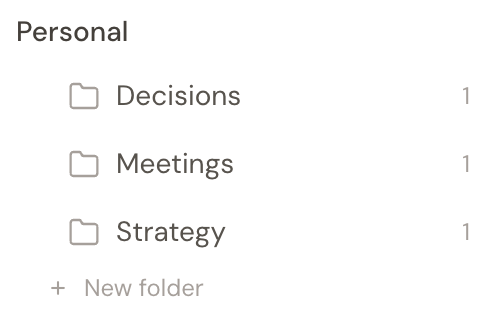
- Strategy folder: positioning, ICP, competitive landscape, pricing rationale
- Meetings folder: investor calls, customer interviews, team retros
- Decisions folder: what you decided and why, so you don't revisit the same debate
- Team knowledge base: shared context so your team's AI works from the same source of truth
A concrete workflow
You finish a customer interview. Drop your raw notes into Hjarni. Next week, ask Claude to summarize the top 5 pain points across all interviews this month. Claude reads your notes and synthesizes what customers actually said. Not what a language model thinks customers generally care about.
Preparing a board deck? Your AI can pull up your metrics narrative, your strategic priorities, and every decision since the last board meeting.
That means prompts like "Summarize what prospects said about pricing" or "Draft this month's investor update" start from your actual company history instead of generic startup advice.
Why not just use Notion or Google Docs?
You probably already do, and Notion now has its own MCP server. But a workspace built for people, with databases, pages, and permissions, is a lot for an assistant to wade through. Hjarni is a plain Markdown knowledge base built for AI to read and write. Set folder-level instructions so your AI is formal for investor materials and direct for internal strategy work.
The best AI assistant is one that already knows your company. Hjarni makes that possible.
What founders store in Hjarni
- Strategy docs: positioning, ICP, pricing rationale, and the decisions behind them
- Customer knowledge: interview notes, objections, recurring pain points, and sales feedback
- Investor memory: meeting notes, diligence questions, and board prep context
- Shared operating context: one source of truth for founders, operators, and their assistants
- Different rules for different work: investor tone in one folder, blunt internal tone in another
- Ownership of the archive: portable Markdown notes you can export anytime
When it's not just you
The moment you add a cofounder or your first hires, the same knowledge base becomes a shared one. Everyone's AI reads the same strategy, decisions, and customer notes. Per-folder roles let you keep investor decks and compensation notes locked down while the rest stays open. See Hjarni for Teams.